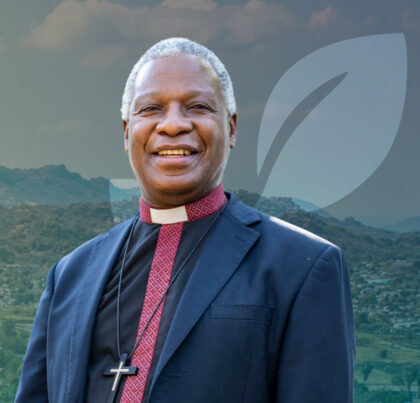
Address by Nolitha Fakude
18 August 2026


It is both a privilege and a profound responsibility to join you in commemorating one of the most painful chapters in our democratic history.
Nolitha Fakude,
Chair of Anglo American South Africa
Thank you very much, Programme Director – Luvuyo Madasa, Your Grace, Archbishop Thabo Makgoba – the patron of the Marikana Renewal Programme, Richard Stewart – CEO of Sibanye-Stillwater and your leadership team.
Distinguished representatives from organised labour, the mining industry, civil society and government, and most importantly amalungu omndeni akhoyo nathi namhlanje – the families that we are, together, commemorating the tragic loss of lives during that dreadful week in August fourteen years ago.
Molweni.
It is both a privilege and a profound responsibility to join you in commemorating one of the most painful chapters in our democratic history.
We gather today not simply to mark the passage of time, but to honour lives. We gather to remember fathers, sons, brothers, husbands, colleagues and friends whose absence continues to be felt by those who loved them. We gather, too, in recognition of the enduring pain carried by families and communities whose lives were forever changed by the events of August 2012.
To the mothers and widows; to the brothers and sisters; to the sons and daughters of the deceased, we acknowledge that the passing of time does not diminish loss.
Fourteen years later, the memories remain. The grief remains. And for many, the longing for those who never returned remains. May their souls rest in peace. Akwehlanga lungehlanga.
Today, please allow me to reflect with you on the fact that the past we inherit, and the future we build; on the enduring lessons of Marikana; and on the responsibility we share to transform remembrance into healing, and healing into renewal. It is, ultimately, a reflection on how we build a future worthy of those whose lives we honour today; a future anchored in dignity, guided by compassion, and inspired by hope.
For me, this reflection speaks to something that is true not only of Marikana, but of South Africa itself. I say this because every generation inherits a past. We inherit the achievements and sacrifices of those who came before us.
We inherit their courage, their resilience and their dreams. But we also inherit their unfinished work, their unresolved challenges and, at times, the consequences of decisions made before our time. As I have reflected on the tragedy of Marikana over the years, I have come to appreciate that its significance lies not only in what happened, but in what it revealed about our society and ourselves.
When I think about Marikana, my thoughts travel back long before 2012. They take me back to the mining story I had created in my mind as a child growing up in the Eastern Cape and in a village of Cenyu in Stutterheim. Before I understood mining as an industry, before I understood its contribution to our economy or the complexities of labour relations, I understood mining as part of everyday life.
I grew up in what has, for many decades, been referred to as a mining labour-sending area. It was a place where families were shaped by the rhythm of departures and returns – during the time of The Employment Bureau of Africa, otherwise known as TEBA.
Many men left their homes to work on the mines, often far away from their families, because mining represented one of the few pathways to employment and economic opportunity. As children, we did not necessarily understand the broader forces that created this reality. We simply knew that fathers, brothers and sons were often away.
We knew that households and communities were sustained by women whose quiet strength and resilience were hardly ever acknowledged. When the men returned, they brought back different stories. Some returned having changed the circumstances of their families.
They built homes, educated their children and created opportunities that had previously seemed beyond reach. Mining gave many families hope. It gave many communities a connection to opportunity and a reason to believe in a better future. But there was another side to that story. Others returned carrying the physical and emotional consequences of difficult work underground; while some never returned at all due to workplace safety challenges.
Long before I understood mining through the language of business, I understood it through the language of people. I understood that behind every mineworker is a family. And behind every contribution to our economy is a personal story filled with aspirations, sacrifices and dreams.
That understanding has remained with me throughout my life and throughout my career. It is perhaps why, when Marikana unfolded, I could never see it simply as an event in the history of mining. I saw it as a profound human loss that touched the lives of families and communities, much like those I knew growing up.
In 2022, as South Africa prepared to mark a decade since the tragedy, my own journey intersected more directly with this chapter of our country’s history. I had the previous year assumed the role of President of the Minerals Council South Africa, stepping into a position that carried both significant responsibility and a deep commitment to the future of our industry and our country.
Of course, no leader chooses the circumstances in which history places them – hence, the past we inherit, the future we build. However, leadership is often defined by how we respond when events and experiences challenge our assumptions, test our resolve, and compel us to confront realities that cannot be ignored.
As I reflected on the events of August 2012 and their enduring impact, I found myself thinking not only about what had happened, but about what it continued to reveal about our society and the work that still lay before us, particularly in terms of economic inclusion. What made that reflection especially profound for me was the realisation that this tragedy, which had left such deep scars on our nation, had unfolded during Women’s Month in August.
I thought about the mothers, the wives and partners. The sisters and the daughters who all now carry a story of a loss that was personal as much as it was collective in its impact. I found myself reflecting on the countless women I had known growing up in the village.
In many ways, the story of Marikana is also a story of women – women who have carried grief with dignity, who have sustained families through unimaginable hardship, and women who have shown extraordinary resilience in the face of profound loss, while continuing to commit and contribute to the economy. It was in reflecting on their experiences that Marikana became deeply personal for me. Because behind every life lost was a family forever changed. And behind many of those families were women who, despite their own pain, found the courage to endure, to lead, and to keep hope alive.
Marikana was about more than the experiences of any one individual mining company. It was a watershed moment for mining in democratic South Africa. The tragedy was a wake-up call that altered the way the industry understood its relationship with stakeholders, particularly workers. It reminded us that mining is not only about the minerals we extract, the investment we attract, or the contribution we make to the economy.
At its heart, mining is about people. It is about the aspirations that bring individuals to our operations, the families who depend on them, and the communities whose futures are intertwined with the fortunes of the industry. Perhaps, the most important lesson to emerge from Marikana was that trust is an ongoing project between employers and employees. It must be earned continuously.
Economic contribution alone is not enough. Of course, jobs matter. Wages matter. And investment matters. In the years since Marikana tragedy, there has been a growing recognition across the industry that the engagement cannot be limited to moments of crisis or negotiation alone. It must become part of the everyday fabric of leadership.
CEOs and other business leaders realised that employee relations cannot be outsourced – these are human connections that require nurturing. They require a human-centred approach to leadership – one grounded in humility and a willingness to listen, not simply to respond, but to understand. It requires companies to engage openly and honestly with workers and communities, particularly when conversations are difficult.
That week, in August 2012, challenged all of us to look beyond positions and processes, and to focus instead on relationships. Because when relationships are strong, trust can grow. And where trust grows, it becomes possible to work through even the most difficult challenges together.
Thankfully, today we are in a much different place – in part thanks to the courageous conversations that Archbishop Makgoba has helped to facilitate, over the years, between the mining industry leaders and organised labour.
While the pain of Marikana can never be undone, it is encouraging to see the commitment that has been made to support healing and renewal. In this regard, I wish to acknowledge the efforts of Sibanye-Stillwater, working alongside the families of the deceased, Archbishop Thabo Makgoba, organised labour, and community stakeholders.
What I find particularly meaningful is the recognition that renewal is not something that can be delivered to people. It must be built with them. The programme’s emphasis on honouring, engaging and creating with each other reflects an understanding that healing begins with listening, it grows through partnership, and finds expression in tangible improvements in people’s lives.
Of course, no initiative can erase the sorrow of August 2012. However, every sincere effort to acknowledge the past, restore dignity and create hope contributes to the future that we are all seeking to build.
It is heartening to know that a permanent memorial will soon stand at the Koppie, the place where so many lives were lost. However, a memorial also asks something of us.
To my colleagues across the mining industry, the legacy of Marikana challenges us to be deliberate in nurturing trust and doing so with the same care and determination that we have brought to improving workplace safety.
To government, the Koppie asks for continued partnership, in the building of the actual memorial, and certainly in the unending work of helping this country make peace with this chapter of our history.
To organised labour and community leadership, the Koppie asks the same honesty and accountability that it asks of business, which is to continue nurturing trust, because trust is a lifelong project.
Those who speak for people must remain connected to their voices and concerns. To the young people supported through the Sixteen-Eight Memorial Trust. Many of you are pursuing opportunities your fathers hoped for, worked for and dreamed about. Through your achievements, their legacy lives on.
My hope is that you will lead boldly, serve generously and help shape the future of our country. After all, the future belongs to those who refuse to be defined by what they inherit, and who rather choose instead to build something better. So, if you choose that path, know that there are many South Africans committed to opening doors and helping you succeed.
To all of us collectively, the Koppie asks that we keep returning to this place and be honest about how we are doing, what we promised, what we delivered, and what we still owe each other and future generations.
To the families – fourteen years is long, yet you have carried what no family should be asked to carry. You have done so with a dignity, courage and grace that have often exceeded those of the institutions charged with serving you.
What we, as an industry, owe your husbands, your fathers, your brothers and your sons is more than remembrance – It’s building together as society that listens and cares. That, for me, is the deeper meaning of the past we inherit and the future we build together. Until that becomes true for all who live and work in this country, none of us can claim that our work is finished.
It is my sincere prayer, to the families, that you continue to find comfort, strength and peace in the midst of a loss that can never truly be measured.
May we prove worthy of the memory of your beloved.
May we honour them not only with our words, but through our actions.
And may your loved ones’ memories remain as a beacon of unity and commitment to building better futures for all.
Siyabulela. Thank you.