Address by Richard Stewart
18 August 2026

Greetings to you all, and thank you for being part of the Marikana Memorial Lecture.
Today we commemorate a significant moment in the history of our industry and our country.
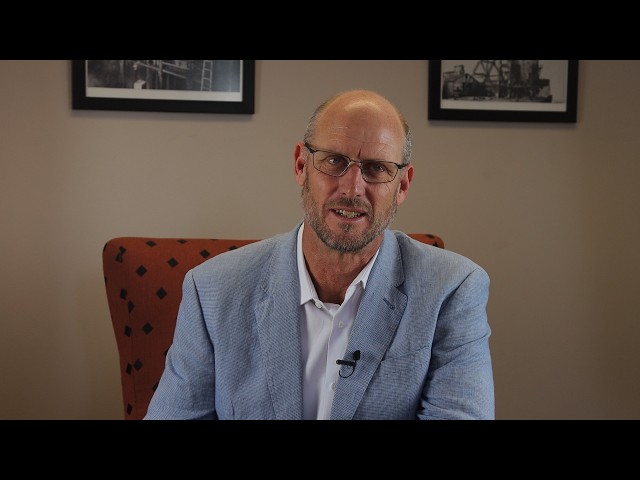
Richard Stewart,
CEO Sibanye-Stillwater
This is the 7th time that we are gathering in solidarity with the families who lost 44 of their loved ones, with those injured, and with our colleagues who experienced the trauma and the loss, and with the community around our Marikana operation.
Each year, this moment asks us to remember with respect, and honour those who died in a dispute that changed the structure of relationships in the mining industry.
For me, remembrance is deeply human. It is about respect for those who still carry the loss and the impact of what happened, it’s about acknowledging that it did happen.
The tragedy in 2012 was not an isolated event; it was a symptom of deep fractures within our society. Acknowledgement is about more than just honouring the memory of those who died, it is also about acknowledging the broader role played by the mining industry and by various institutions that, over many decades, perpetuated inequality, exclusion and hardship.
We need to acknowledge and learn transparently: speaking honestly about what was good, about what was bad, about what failed, and what we take and what we learn from it.
Without acknowledgement there can be no healing. And without healing there can be no trust. And without trust, we cannot build the future that we all wish for ourselves and for the generations that will follow us.
At Sibanye-Stillwater, our entire purpose, our reason for being, is about creating a better future for people and our planet. And our vision guides how we deliver that purpose, that vision is: mining can and must create shared value for all stakeholders; that includes shareholders, employees, communities, governments and future generations. The very essence of what defines who we are as a company, and how we measure our success, is inseparable from the people and the ecosystems in which we operate.
When we assumed the responsibility for the Marikana operations in 2019, we knew we were inheriting far more than a mining asset. We were inheriting grief, mistrust and unfinished conversations. But we were also inheriting an opportunity – an opportunity to build a different future.
The philosophy underpinning Letsema, which means working together, is simple but is profound: Honour. Engage. Create. These three pillars are interdependent.
We begin with Honour because that’s where progress starts, it starts with acknowledgement. We must recognise what happened and acknowledge the suffering of families and communities, and we must accept the lessons of the past.
Honour is not about passive remembrance; it is about trying to understand perspectives and lived experiences. It is a decision to learn, to show and respect and keep the memory alive through the way we conduct ourselves.
The second pillar is Engagement, and for me at the moment this is critical and arguably the most important pillar for where we are today in our journey.
For many years, companies have asked themselves: What should we engage communities about? What do we want to deliver? Or what is our end goal? We receive guidance from regulators and governments, NGOs comment, and many other stakeholders in trying to answer these questions.
But I am going to suggest we are not asking the right question. If we truly want to build trust the most important question to ask ourselves is not what are we engaging on, or what must we deliver, but rather how are we engaging? Do we arrive with answers, or are we prepared to listen? Do we speak to communities, or do we work with communities? That shift in approach changes everything. If we engage in the right way, we move away from talking to a community, to partnering with a community.
Importantly, successful engagement requires all of us to play our role; communities, government, organised labour, ourselves as the company so we can clarify responsibilities and understand expectations of each other. Genuine engagement means listening as much as speaking. It means recognising that tensions cannot be ignored, different voices must be heard, and appreciating that engagement does not always mean agreement, but it does mean we keep working towards understanding, dignity and trust.
The third pillar is Create. Ultimately, remembrance, dialogue, developing a common understanding must lead to tangible outcomes, improved opportunities, infrastructure and livelihoods and, most of all, hope and belief in a better future.
As a company, as an industry and as a country, we are often too quick to define what an uplifted community should look like, or what sustainability after mining should mean. It is not ours to determine alone. That has to be co-created together with all stakeholders, particularly those who are directly impacted.
A new future is one where civil society through communities drive their own development with the support of government and the industry. It is one where trust is built through partnership. It is one where dignity, opportunity and accountability are shared responsibilities.
That is why Letsema matters. Through this process, stakeholders come together not as opponents but as partners, committed to finding solutions to shared challenges.
Marikana, I dare say, has taught us that no stakeholder in South Africa can solve challenges alone. Progress becomes possible when people choose partnership over division. These lessons are broader than any company or industry. They apply at a country level as well.
Whether in business, government or society, sustainable progress depends on listening before tensions become a crisis. How many times have we seen in our country that we only react once frustrations turn to crisis. How many lessons will it take before we learn?
Sustainable progress depends on successful and resilient businesses and governments that are willing to address the societal challenges that hinder our growth and development.
There is sometimes a misconception that community development and business performance are separate pursuits, but they are not.
Shared value is not corporate social investment. It is not a charitable activity that occurs after business success has been achieved.
Shared value is created when responsible, profitable businesses and thriving communities reinforce one another.
For communities to benefit over the long term, mines must remain viable. They must continue creating jobs, they must continue generating economic activity, then they will continue to invest in infrastructure and attracting much needed capital.
Equally, for mining companies to succeed, they require stable operating environments, trusted relationships and communities that see themselves as partners in a shared future.
For us, profitability is not separate from social responsibility; it enables us to invest, to partner and to create value over time.
This is a particularly important concept for South Africa. Our country possesses extraordinary mineral resources, expertise and human potential, but unlocking that potential requires regulatory certainty, social stability, stakeholder trust, resilient infrastructure and a shared commitment to growth. It requires government, business, labour and communities to work together to address our single biggest issue which is poverty, unemployment and inequality.
We must stop externalising this problem. It is too easy to say that responsibility belongs elsewhere: that mining companies must fix everything, that government alone must define what communities need, or communities must simply accept decisions made by others and elsewhere. That is not how sustainable progress is built.
Every stakeholder must acknowledge their role in what is not working and be part of the solution:
- Government and regulators have a critical responsibility not only to set expectations, but also to enable the conditions in which industry, communities and other stakeholders can help fix what needs to be fixed and deliver into those expectations.
- Local government has a critical role to play in creating the conditions for basic service delivery, infrastructure maintenance and local development.
- Business must play its part as an economic contributor and partner, but it cannot and should not permanently take over the roles and responsibilities of the state.
Sustainability is not a soft issue. People, relationships and social partnerships are absolutely fundamental to long-term success.
If we ask what success at Marikana should look like in 10 or 20 years from now, I don’t believe we should be defining that by what any single institution can and would have delivered. We all want communities, of course, to have reliable water, electricity, infrastructure, opportunity and dignity. But success is also whether we have learned how to create a new future together.
For me, success would mean:
- That the community understands what it needs and wants, that we, as a business, understand those needs and aspirations.
- That the community understands what we as business, are realistically capable of delivering; and that we have built sufficient trust to sit together, to engage constructively to close the gap, to talk openly about what can be delivered, to unblock what is constraining delivery, and how we can both contribute to these solutions.
- That government efficiently meets the needs of society within its mandate in collaboration with civil society and the private sector.
Success would mean that difficult issues can be discussed openly and transparently, solutions found and implemented. It would mean local government delivers, business plays its role as an economic contributor, and ultimately shared value amongst all stakeholders who are uplifted. It would mean we are all striving towards the same objective, even where progress is uneven.
In that sense, the power of the renewal process is not about delivering projects, important as those are. It is how those projects are delivered, it is learning how to imagine a future together in a trustworthy way, and then working on it, together.
I am indeed optimistic about what our future holds. I believe we stand at a point where we can take the lessons of Marikana and apply them more broadly. We can use acknowledgement to foster healing. We can use dialogue to align around a common goal. We can use partnerships to create opportunities that endure.
I started this address today by saying that this gathering gives us an opportunity not only to remember, but also to reflect. Let me add a third, something deeply embedded in the very purpose of our organisation: As a collective, we can and should reimagine our future.
This is not about forgetting the past, but it is about refusing to be defined by it. If together we can imagine that future clearly enough – a future built on dignity, trust, opportunity and shared prosperity – we will all be able to reset for a better future that will outlast all of us and benefit the generations to come.
Finally today, I would like to thank the families, community representatives, traditional leadership, especially the Bapo Ba Mogale, organised labour, our employees, and all stakeholders who continue to be a part of this journey. Your willingness to engage, even when it has been difficult, has made progress we’ve made possible.
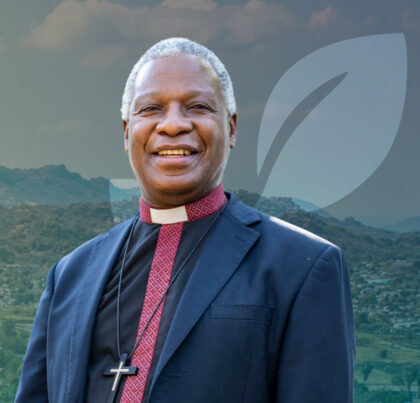
I would like to express my sincere gratitude to Archbishop Thabo Makgoba for his wisdom, guidance and unwavering commitment as the patron of the Marikana Renewal process. You have helped create space for honest dialogue, reconciliation and progress.
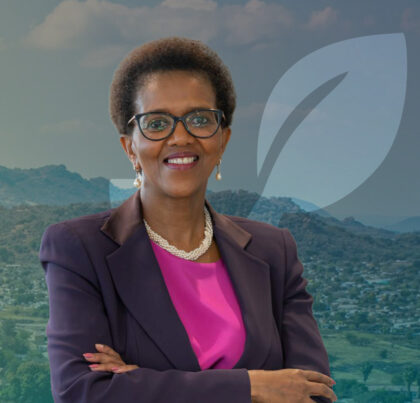
Also, thank you very much to Nolitha Fakude, an inspiring leader in our industry, for her valuable reflections today.
So ladies and gentlemen, in closing, please:
- Let us honour those who lost their lives.
- Let us engage with one another honestly, respectfully and with empathy.
- Let us jointly create opportunities that endure beyond mining.
- Let us stop waiting for others to solve the challenges before us.
- Let us accept our shared responsibility for building a better South Africa.
And let us continue to reimagine a future worthy of those whose memory brings us together today.
Let us embrace the Sibanye-Stillwater spirit – we are one!
Thank you.